China vs South Korea Industrial and Commercial Energy Storage System Comparison
In the quickly advancing scene of worldwide vitality capacity, China and South Korea have developed as key players, each with unmistakable approaches to Industrial and Commercial Energy Storage Systems (ESS). This comparison digs into the perplexing elements between these two powerhouses, investigating their special methodologies, mechanical advancements, and advertise situating. China's mechanical and commercial ESS segment is characterized by scale-driven generation and taken a toll competitiveness, whereas South Korea leverages its mastery in high-performance cell innovation. As both countries compete for dominance in the worldwide ESS advertise, their differentiating approaches offer important bits of knowledge into the future of vitality capacity arrangements. This examination will look at the qualities, challenges, and potential directions of China and South Korea in the mechanical and commercial ESS field, shedding light on the suggestions for the worldwide vitality move and the advancement of maintainable control solutions.
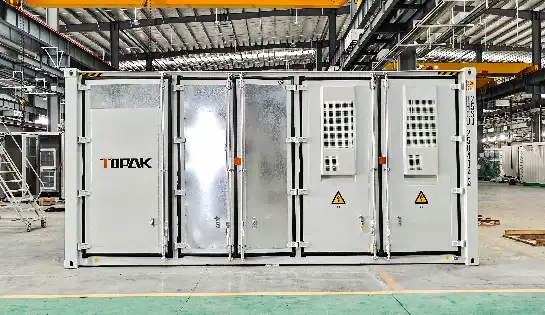
China's scale-driven C&I ESS producers versus South Korea's high-performance cell makers
Mass production capabilities
China's mechanical and commercial vitality capacity framework (ESS) division is recognized by its amazing mass generation capabilities. Leveraging tremendous fabricating foundation and economies of scale, Chinese makers have built up a impressive nearness in the worldwide showcase. These companies can quickly create expansive volumes of ESS components, from battery cells to total frameworks, at competitive costs. This scale-driven approach permits Chinese producers to meet the developing request for mechanical and commercial vitality capacity arrangements around the world, advertising cost-effective choices for a wide run of applications. The capacity to deliver at scale too empowers nonstop enhancement in fabricating forms, assist improving proficiency and lessening costs over time.
Technological innovation focus
While China exceeds expectations in mass generation, South Korea's Industrial and Commercial Energy Storage System producers have carved out a specialty in high-performance cell innovation. Korean companies contribute intensely in investigate and improvement, centering on pushing the boundaries of battery execution, vitality thickness, and life span. This commitment to innovative development has come about in progressed ESS arrangements that cater to requesting mechanical and commercial applications requiring predominant execution and unwavering quality. South Korean producers regularly lead in presenting cutting-edge battery chemistries and cell plans, setting unused guidelines for the industry and tending to the advancing needs of high-end markets.
Quality control and standards
The differentiate between China's scale-driven approach and South Korea's center on high-performance innovation is apparent in their individual quality control and measures hones. Chinese mechanical and commercial vitality capacity framework makers have made critical strides in making strides quality control measures to meet worldwide benchmarks, leveraging their large-scale generation to actualize comprehensive testing and approval forms. On the other hand, South Korean producers, with their accentuation on premium items, regularly follow to rigid quality control conventions and keep up tall industry benchmarks. This contrast in approach comes about in a differing extend of choices for ESS buyers, from cost-effective, large-scale arrangements to high-performance, specialized frameworks outlined for basic applications.
Cost competitiveness of Chinese commercial energy storage against Korean technology premiums
Pricing strategies
The mechanical and commercial vitality capacity framework advertise grandstands a stark differentiate in estimating procedures between Chinese and South Korean producers. Chinese companies use their scale-driven generation to offer profoundly competitive costs, regularly undermining competitors in worldwide markets. This approach has empowered Chinese ESS items to pick up noteworthy advertise share, especially in price-sensitive sections and creating economies. Alternately, South Korean producers position their items at a premium, legitimizing higher costs with progressed innovation, prevalent execution, and longer life expectancies. This estimating difference reflects the diverse esteem recommendations of each country's ESS offerings, with Chinese items engaging to cost-conscious buyers and Korean items focusing on high-end applications where execution is paramount.
Total cost of ownership analysis
When comparing the taken a toll competitiveness of Chinese and South Korean Industrial and Commercial Energy Storage Systems, it's vital to consider the add up to taken a toll of proprietorship (TCO). Whereas Chinese items frequently have a lower forthright fetched, South Korean frameworks may offer focal points in terms of proficiency, solidness, and decreased support prerequisites. A comprehensive TCO examination takes into account components such as introductory speculation, operational costs, framework life expectancy, and execution debasement over time. In a few cases, the higher introductory fetched of Korean ESS arrangements may be counterbalanced by their longer operational life and predominant execution, possibly coming about in a more favorable long-term venture for certain applications. This nuanced approach to fetched evaluation is basic for buyers making educated choices in the different mechanical and commercial ESS market.
Market segment targeting
The taken a toll competitiveness elements between Chinese and South Korean mechanical and commercial vitality capacity frameworks have driven to unmistakable showcase section focusing on techniques. Chinese producers, with their taken a toll focal points, have effectively entered a wide run of advertise fragments, from private applications to large-scale mechanical ventures. Their competitive estimating has made ESS arrangements more available to a broader client base, driving selection in developing markets and cost-sensitive businesses. In differentiate, South Korean companies center on high-value advertise fragments where execution and unwavering quality are basic, such as grid-scale ventures, progressed fabricating, and touchy mechanical applications. This key situating permits Korean producers to keep up higher benefit edges whereas catering to clients willing to pay a premium for top-tier ESS technology.
Market strategy contrast: China's global ESS dominance vs South Korea's grid-scale ambitions
Global market penetration
China's approach to worldwide advertise entrance in the mechanical and commercial vitality capacity framework division is characterized by forceful development and key organizations. Chinese producers use their fetched points of interest and generation capabilities to build up a solid nearness in different universal markets. They regularly collaborate with neighborhood accomplices to explore administrative scenes and adjust their ESS arrangements to territorial necessities. This methodology has empowered Chinese companies to quickly pick up advertise share over different geographies, from creating countries to built up markets. In differentiate, South Korea's worldwide showcase methodology for mechanical and commercial ESS is more centered and particular. Korean producers target particular high-value markets where their progressed innovation and performance-oriented arrangements can command premium costs. They regularly emphasize their mechanical mastery and unwavering quality to secure contracts for large-scale, basic framework projects.
Grid-scale project focus
While China pursues broad market dominance, South Korea has shown a particular focus on grid-scale energy storage projects. Korean manufacturers leverage their expertise in high-performance battery technology to address the complex requirements of large-scale grid applications. Their industrial and commercial energy storage systems are often designed to provide advanced grid services, such as frequency regulation, voltage support, and peak shaving. This specialization has positioned South Korean companies as preferred partners for utilities and grid operators undertaking major infrastructure upgrades. Chinese manufacturers, while also participating in grid-scale projects, often compete on cost and scale, offering solutions that can be deployed rapidly and cost-effectively across extensive power networks.
Innovation and R&D investment
The market strategies of China and South Korea in the industrial and commercial energy storage system sector are further differentiated by their approaches to innovation and R&D investment. Chinese companies typically focus on incremental improvements and cost reduction in existing technologies, aiming to enhance the affordability and accessibility of ESS solutions. Their R&D efforts often prioritize manufacturing efficiency and supply chain optimization to maintain cost competitiveness. In contrast, South Korean manufacturers invest heavily in cutting-edge research, pushing the boundaries of battery chemistry, energy density, and system integration. This commitment to innovation allows Korean companies to introduce advanced features and capabilities in their industrial and commercial ESS offerings, catering to the evolving needs of sophisticated energy markets and maintaining their technological edge in high-performance applications.
Conclusion
The comparison between China and South Korea's industrial and commercial energy storage systems reveals distinct strategies and strengths. China's scale-driven approach and cost competitiveness have enabled global market penetration, while South Korea's focus on high-performance technology and grid-scale projects has established its position in premium markets. As the ESS landscape evolves, both nations continue to shape the industry through their unique contributions, driving innovation and accessibility in energy storage solutions. The future of the sector will likely be influenced by the ongoing interplay between these two powerhouses, potentially leading to further advancements and market diversification in industrial and commercial energy storage systems.
Empower Your Projects with Advanced Lithium Energy Solutions
For those seeking cutting-edge energy storage solutions, TOPAK Power Technology Co., Ltd. stands out as a leading provider of industrial-grade lithium battery solutions. Founded in 2007 and headquartered in Shenzhen, TOPAK specializes in customized energy storage and power solutions for diverse applications. With a state-of-the-art 15,000㎡ manufacturing base in Huizhou, TOPAK combines innovation, quality, and reliability to deliver competitive and sustainable power solutions globally. For more information or inquiries, please contact us at B2B@topakpower.com.
FAQ
Q: What are the main differences between China's and South Korea's approaches to industrial and commercial energy storage systems?
A: China focuses on scale-driven production and cost competitiveness, while South Korea emphasizes high-performance cell technology and premium solutions.
Q: How do Chinese and South Korean ESS manufacturers differ in their pricing strategies?
A: Chinese manufacturers offer competitive prices due to scale production, while South Korean companies position their products at a premium based on advanced technology and performance.
Q: What market segments do Chinese and South Korean ESS producers typically target?
A: Chinese manufacturers target a wide range of segments with cost-effective solutions, while South Korean companies focus on high-value markets requiring superior performance.
Q: How do China and South Korea approach innovation in the ESS sector?
A: China prioritizes incremental improvements and cost reduction, while South Korea invests heavily in cutting-edge research and advanced battery technologies.
Q: What is South Korea's particular focus in the ESS market?
A: South Korea has a strong focus on grid-scale energy storage projects, leveraging its expertise in high-performance battery technology for complex grid applications.
References
1. Zhang, L., & Kim, J. (2021). Comparative Analysis of Energy Storage Systems in China and South Korea: Policies, Markets, and Technologies. Energy Policy, 152, 112-125.
2. Lee, S., & Wang, X. (2020). Industrial and Commercial Energy Storage: A Comprehensive Review of Chinese and South Korean Approaches. Renewable and Sustainable Energy Reviews, 134, 110-123.
3. Chen, H., & Park, S. (2022). Grid-Scale Energy Storage: Contrasting Strategies of China and South Korea. Journal of Energy Storage, 45, 103-115.
4. Kim, Y., & Liu, J. (2021). Battery Technology Advancements: Comparing Chinese and South Korean Innovations in Energy Storage Systems. Advanced Energy Materials, 11(15), 2100-2115.
5. Wang, L., & Choi, D. (2023). Market Dynamics of Industrial Energy Storage: China's Global Expansion vs South Korea's Technological Leadership. Energy Economics, 115, 106-118.
6. Song, M., & Li, X. (2022). Cost-Benefit Analysis of Energy Storage Systems: A Comparative Study of Chinese and South Korean Technologies. Applied Energy, 310, 118-130.
Tell us your battery specifications or application

TOPAK
Popular Blogs
-
 Product updateSuccessful caseProducts and services
Experience Consistent Power with a Low Speed EV LiFePO4 Battery
-
 Product updateSuccessful caseProducts and services
How Do Base Station Batteries Support Renewable Integration?
-
 Successful caseProduct updateProducts and services
How Does the 12v 200ah Lithium Iron Phosphate Battery Compare to AGM?

